← Home · Laboratory

Laboratory CBR Testing Services in Detroit

Together, we solve the challenges of tomorrow.

LEARN MORE →

Detroit's freeze-thaw cycles tear up subgrades faster than most contractors expect. We see it every season in the lab when remolded samples from the city's east and west sides arrive with drastically different bearing capacities. The Afterberg limits of these glacial lake plain clays often dictate the entire pavement design, which is why we run them in parallel with every CBR schedule. A soaked CBR value from our Detroit facility gives you the worst-case scenario for spring thaw conditions, which is exactly what MDOT reviewers want to see in the project file. No one here relies on dry-only numbers.

Soaked CBR values from Detroit clays often drop below 3 percent after 96 hours of saturation. That single number changes the entire pavement section.
Process and scope

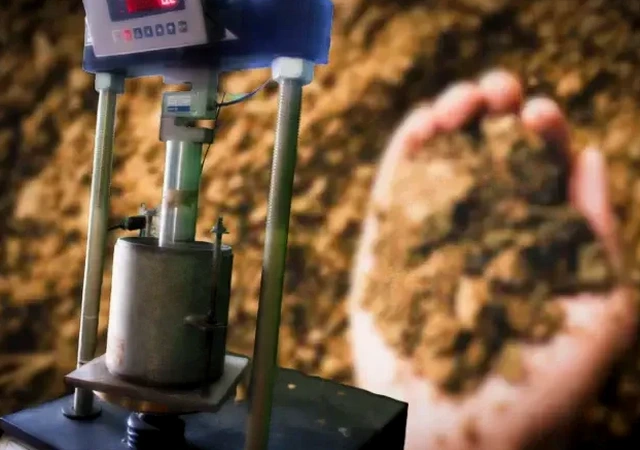
We run every test to ASTM D1883-21 and AASHTO T-193. Detroit soils, particularly the fine-grained deposits left by glacial Lake Maumee, demand strict moisture control during compaction. Our lab prepares samples at optimum moisture from Proctor tests and then soaks them for 96 hours before penetration. The 0.1-inch and 0.2-inch readings come off a calibrated loading press with a digital readout, not a dial gauge from the 1980s. For MDOT and Wayne County submittals we also report the swell percentage, which matters a lot more here than in drier parts of the Midwest.
Laboratory CBR Testing Services in Detroit
Technical reference image — Detroit

Local ground factors

Detroit sits at roughly 600 feet above sea level on a flat lake plain where drainage is sluggish and water tables stay high from March through May. A pavement designed with an overestimated CBR value fails early, and we have seen it in industrial parking lots along the I-94 corridor that heaved and cracked within two seasons. The difference between a CBR of 2 and a CBR of 5 can mean an extra six inches of aggregate base. Skipping the 96-hour soak or using field-moist samples instead of saturated ones produces numbers that look fine on the report but collapse under the first spring load cycle. The flexible pavement design depends entirely on this value being pessimistic and real.

Need a geotechnical assessment?

Reply within 24h.

Email: contact@geotechnicalengineering.biz

Reference parameters

ParameterTypical value
StandardASTM D1883-21 / AASHTO T-193
Sample compaction5-layer modified Proctor (56,000 ft-lbf/ft³)
Soak period96 hours under 10-lb surcharge weight
Penetration rate0.05 in/min constant strain
Reported valuesCBR at 0.1" and 0.2" penetration, swell %
Mold diameter6-inch standard mold
Typical Detroit subgrade CBR2 – 6 % (soaked, fine-grained soils)
Lab accreditationISO/IEC 17025 (A2LA accredited)

Other technical services

01

Standard CBR Package

One-point or three-point CBR with modified Proctor compaction, 96-hour soak, swell monitoring, and full stress-penetration curve. Includes corrected CBR at 0.1-inch and 0.2-inch penetration. Delivered as a signed PDF report within five business days.

02

CBR with Soil Classification Add-on

We add grain-size distribution and Atterberg limits to the CBR report. This combination satisfies MDOT subgrade characterization checklists and helps the geotechnical engineer assign the proper AASHTO group classification for the pavement design catalog.

Regulatory framework

ASTM D1883-21 – Standard Test Method for California Bearing Ratio (CBR) of Laboratory-Compacted Soils, AASHTO T-193 – Standard Method of Test for The California Bearing Ratio, ASTM D1557-12e1 – Standard Test Methods for Laboratory Compaction Characteristics of Soil Using Modified Effort, MDOT 2020 Standard Specifications for Construction – Section 2.07 Subgrade

Quick answers

How much does a laboratory CBR test cost in Detroit?
Why does the CBR test require a 96-hour soak?

The four-day soak simulates the worst-case saturated condition that a subgrade will experience over the life of the pavement. Detroit's high spring water table and slow-draining clay soils mean the subgrade stays near saturation for weeks. A soaked CBR value is the only number that matters for pavement thickness design under AASHTO 1993 and the Mechanistic-Empirical Pavement Design Guide.

What is the difference between lab CBR and field CBR?

Laboratory CBR tests a remolded sample compacted to a specified density and moisture content, then soaked under controlled conditions. Field CBR uses a portable device pushed directly into the in-situ soil. The lab value is used during design to compare materials and set pavement thickness. The field value checks compaction QA during construction. Both are penetration resistance tests, but the lab version isolates the material property from field variability.

How long does it take to get CBR results from your Detroit lab?

Standard turnaround is five business days from sample receipt. The 96-hour soak is mandatory and cannot be shortened without compromising the test validity. We can expedite the compaction and penetration portions once the soak finishes, and we send preliminary numbers by email the same day the press run completes. Final signed reports follow within 24 hours of data reduction.

Location and service area

We serve projects across Detroit and surrounding areas.

View larger map