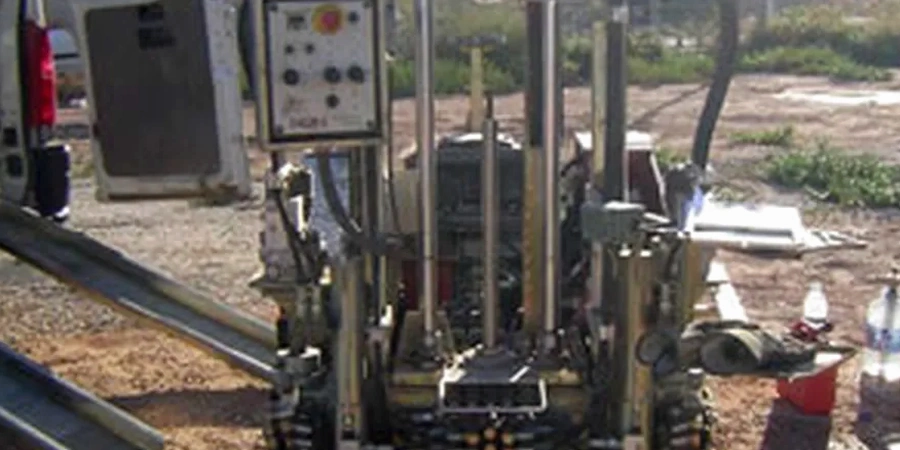
The rig rolls onto a vacant lot on the east side of Detroit, and within minutes the hydraulic rams start pushing a 15 cm² cone penetrometer into the ground at a steady 2 cm per second. No boreholes, no cuttings, no mess. Just a continuous stream of tip resistance, sleeve friction, and pore pressure data feeding back to a hardened laptop in the truck. CPT testing in Detroit has become the default choice for developers navigating the city's complex legacy of buried fill, glacial lakebed deposits, and occasional organics underfoot. We've run these profiles everywhere from Midtown high-rises to industrial parcels along the River Rouge, and the resolution you get from a piezocone simply cannot be matched by standard drilling logs alone. When a client needs to know exactly where the competent bearing stratum begins, or whether a thin silt lens is going to cause differential settlement under a mat foundation, the CPT tells that story in real time. It's not just a test, it's a subsurface narrative.
CPT soundings in Detroit's glacial lake clays typically reveal undrained shear strengths below 30 kPa in the upper 20 feet, a number that drives every foundation decision on the site.
Local ground factors
The most common mistake we see on Detroit projects is relying solely on borings and blow counts in areas with undocumented fill. A contractor drills through 15 feet of brick rubble and cinders, gets refusal on a piece of buried concrete, and calls it bedrock. Then the excavator shows up and finds a 30-foot-deep pocket of saturated ash that was completely missed. CPT soundings don't have that blind spot because the continuous record reveals every lens, every transition, every weak zone. We've watched projects on the Lower East Side get redesigned mid-construction because the actual stratigraphy under the fill was nothing like what the boring logs suggested. The cost of a few CPT pushes upfront is trivial compared to change orders on deep foundations or, worse, a shear failure during excavation. Detroit's water table sits high, often just 5 to 8 feet below grade, which means pore pressure data from a piezocone is not optional, it's essential for any cut deeper than a basement.
Quick answers
What depth can a CPT rig reach in Detroit's glacial clays before refusal?
In the soft lakebed clays typical of Detroit, a 20-ton CPT truck can typically push to depths between 60 and 80 feet before rod friction limits further penetration. The actual refusal depth depends on the presence of dense till layers or buried obstructions. We monitor thrust capacity continuously and will stop the sounding if the cone approaches its load limit of 50 MPa tip resistance. For deeper investigations beyond 80 feet, we can deploy a combination of CPT and rotary drilling with SPT sampling to bridge the stratigraphic gap.
How do you interpret soil type from CPT data without recovering actual samples?
We use the Robertson (1990) soil behavior type (SBT) classification system, which plots normalized tip resistance against normalized friction ratio on a validated chart divided into zones corresponding to different soil types. The piezocone adds pore pressure data that helps distinguish drained sands from undrained clays. For critical projects, we recommend calibrating the SBT interpretation with a few targeted test pit excavations or thin-wall Shelby tube samples to confirm the classification at key depths.
How much does CPT testing cost for a typical Detroit building site?
Can CPT detect buried foundations or underground storage tanks in brownfield sites?
CPT is not a geophysical scanning tool, it measures soil resistance at a single point, so it cannot image buried objects laterally. What it does exceptionally well is detect the abrupt refusal that occurs when the cone hits concrete, steel, or dense debris. If a sounding hits refusal at 12 feet in an area where neighboring soundings reach 50 feet, that's a strong indicator of buried obstruction. For comprehensive brownfield screening, we recommend combining CPT with electrical resistivity tomography to map buried structures and contaminant plumes before intrusive investigation begins.