← Home · Laboratory

Atterberg Limits Testing in Detroit: Plasticity & Soil Classification for Foundation Design

Together, we solve the challenges of tomorrow.

LEARN MORE →

Detroit's glacial lakebed clays have a plasticity range that surprises engineers unfamiliar with the Great Lakes basin. We routinely pull samples from sites near the Rouge River or along the I-94 corridor where the liquid limit exceeds 60 percent, placing the material squarely in the high-plasticity range. This isn't a lab curiosity; it directly controls the shrink-swell potential beneath basements and slab-on-grade construction in neighborhoods like Corktown and Midtown. Many of our projects start with a grain-size analysis to confirm the fines fraction, then move directly into Atterberg limits to nail down the classification per ASTM D2487 and the Unified Soil Classification System. For sites where the plasticity index tops 25, we often recommend supplemental CPT testing to profile the undrained shear strength before finalizing foundation elevations. The combination of lab and in-situ data becomes essential when you're dealing with the laminated silty clays that dominate the Detroit River corridor.

A plasticity index above 20 in Detroit's lakebed clays typically signals a CH classification and demands careful evaluation of volume change potential before foundation design proceeds.

Methodology and scope

The test sequence follows ASTM D4318-17e1 with a few procedural refinements we've adopted for the lacustrine clays common in southeast Michigan. We start with the multipoint liquid limit method using a Casagrande percussion cup, running at least four trials between 15 and 35 blows and fitting the flow curve per the standard. The plastic limit thread-rolling procedure requires patience: these glacially-derived fines often contain trace organics from the historic marsh deposits underlying much of the city. Our technicians prepare the minus-No. 40 sieve fraction from oven-dried specimens, hydrate them for a minimum of 16 hours for clays, and report the liquid limit, plastic limit, and plasticity index to the nearest whole number. When a sample plots near the A-line on the plasticity chart, we run the one-point liquid limit check as a verification. For brownfield redevelopment projects in the Eastern Market district, where fill materials mix with native clay, the Atterberg limits often reveal a dual classification that alters the presumed bearing stratum. In those cases, a Proctor compaction test helps us determine whether the on-site material can be re-used as engineered fill or needs to be exported.
Atterberg Limits Testing in Detroit: Plasticity & Soil Classification for Foundation Design
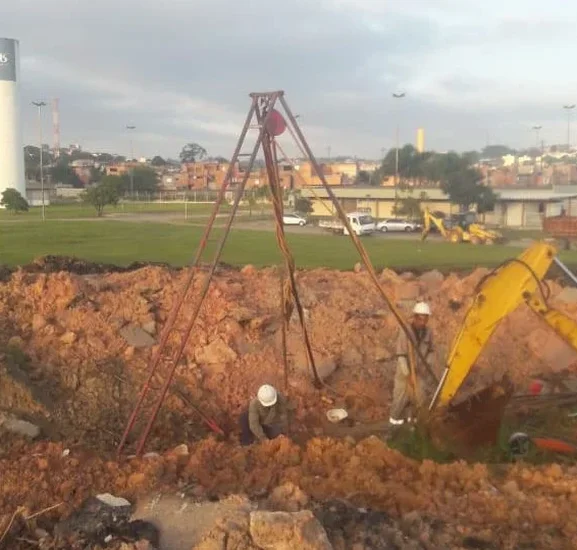
Technical reference image — Detroit

Local considerations

Detroit sits at roughly 600 feet above sea level on a thick sequence of glacial till and lakebed deposits shaped by the retreat of the Laurentide Ice Sheet. The post-glacial clays that mantle much of Wayne County carry a moderate to high shrink-swell risk, particularly in areas with fluctuating groundwater tables—think of the clay plains extending toward Dearborn and the downriver communities. When the plasticity index runs above 25 and the clay fraction exceeds 40 percent, we've measured linear shrinkage values that can translate to differential heave of an inch or more beneath a lightly loaded slab. That's enough to crack partition walls and bind doors. The risk magnifies on sites where the upper five feet alternate between desiccated crust and softer intact clay; the Atterberg limits become the diagnostic tool that distinguishes a marginal soil from a clearly problematic one. For projects involving deep excavations near the Detroit River or along the M-10 Lodge Freeway, we integrate the plasticity data with slope stability analysis to evaluate cut-bank behavior during the construction phase and after permanent drainage features are installed.

Need a geotechnical assessment?

Reply within 24h.

Email: contact@geotechnicalengineering.biz

Technical parameters

ParameterTypical value
Standard MethodASTM D4318-17e1 (Multipoint Liquid Limit)
Liquid Limit DeviceCasagrande percussion cup, grooving tool per ASTM
Hydration Period (Clays)16 hours minimum (overnight preparation)
Plastic Limit ProcedureThread-rolling method, 3 mm diameter criterion
Sieve Fraction TestedMinus No. 40 (425 μm) from oven-dried material
Plasticity Chart ReferenceASTM D2487 (USCS), Casagrande A-line
One-Point MethodPermitted for verification; correlation factor per D4318
Reporting UnitsWhole number (LL, PL, PI); water content to 0.1%

Associated technical services

01

Complete Atterberg Limits Determination

Multipoint liquid limit, plastic limit, and plasticity index per ASTM D4318. Includes moisture content, flow curve plot, and USCS classification per ASTM D2487. Standard turnaround is 3-4 business days from sample receipt; rush processing available for construction-phase decision-making.

02

Plasticity-Based Soil Classification Package

Combined Atterberg limits and minus-No. 200 wash analysis, calibrated to the Unified Soil Classification System. We deliver a single-page classification summary suitable for inclusion in geotechnical baseline reports, foundation submittals, and MDOT earthwork documentation.

Applicable standards

ASTM D4318-17e1 – Standard Test Methods for Liquid Limit, Plastic Limit, and Plasticity Index of Soils, ASTM D2487-17e1 – Standard Practice for Classification of Soils for Engineering Purposes (Unified Soil Classification System), ASTM D422-63(2007)e2 – Standard Test Method for Particle-Size Analysis of Soils (referenced for fines correlation), IBC 2021 Section 1803 – Geotechnical Investigations (soil classification requirements), MDOT Standard Specifications for Construction – Section 205 (Embankment materials, plasticity criteria)

Frequently asked questions

What does the plasticity index tell me about a Detroit clay soil?

The plasticity index (liquid limit minus plastic limit) defines the water-content range over which the soil behaves plastically. For Detroit's typical lakebed clays, a PI between 10 and 20 indicates low to medium plasticity (CL); a PI above 20 often signals a high-plasticity clay (CH) with elevated shrink-swell potential and lower drained shear strength. This directly influences allowable bearing pressure and the recommended underslab preparation.

How is the Atterberg limits test performed in your lab?

We follow ASTM D4318-17e1 using the multipoint liquid limit method with a calibrated Casagrande percussion cup. The minus-No. 40 fraction is prepared from oven-dried material, hydrated overnight for clays, and tested at increasing water contents to establish the flow curve at 25 blows. The plastic limit is determined by the thread-rolling method, and we report all three values—liquid limit, plastic limit, and plasticity index—to the nearest whole number.

How much does Atterberg limits testing cost in Detroit?

For a standard multipoint Atterberg limits determination (LL, PL, PI) on a single sample, the cost typically ranges from US$60 to US$100 depending on sample condition and whether the minus-No. 40 preparation requires additional drying or grinding. Combined packages that include a grain-size wash and full USCS classification are priced accordingly. We provide a written quote before any work begins.

How long does it take to get results from your Detroit lab?

Standard turnaround is 3 to 4 business days from the time the sample is received, assuming it arrives in a condition suitable for immediate preparation. Samples requiring extended oven drying or those that arrive late on a Friday may add an extra day. We can accommodate 24-to-48-hour rush processing for active construction projects when coordinated in advance.
Location and service area

We serve projects across Detroit and surrounding areas.

View larger map