← Home · Underground Excavations

Geotechnical Design of Deep Excavations in Detroit: Shoring, Stability, and Groundwater Control

Together, we solve the challenges of tomorrow.

LEARN MORE →

On sites across Detroit, the biggest variable we see isn't the steel—it's the ground itself. The city sits on a complex mix of glacial lake plain deposits that shift from stiff clay to loose sand within the same block, often capped with several feet of urban fill from demolished pre-war structures. Before a shoring system gets detailed, the soil profile needs to be nailed down. We combine test pits for shallow characterization with deeper borings to map the contact between cohesive layers and the underlying water-bearing sand that complicates excavation below 15 feet. Once that contact is defined, in-situ permeability testing gives us the real hydraulic conductivity numbers the dewatering system depends on—because guessing at groundwater flow in downtown Detroit is not a design strategy.

Detroit's glacial lake plain stratigraphy means the design section that works on Woodward Avenue may fail two blocks east where the sand lens thickens.

Methodology and scope

Deep excavation design in Detroit revolves around three interacting constraints: lateral earth pressures in stiff glacial clay, groundwater inflow from sand lenses, and surcharge loads from adjacent historic masonry buildings that tolerate almost zero movement. The shoring system typically combines soldier pile and lagging walls with tieback anchors drilled into the competent till below the active zone. We model the excavation sequence in stages, verifying that the passive resistance ahead of the cut remains adequate before each lift is removed. For cuts deeper than 25 feet, internal bracing or rakers become the primary lateral support, and we run finite element analyses to predict wall deflection and ground loss behind the wall. Corner effects in Detroit's narrow downtown lots are real—the stress concentration at re-entrant corners demands heavier waler sections and closer anchor spacing than the mid-wall design would suggest. Every shoring plan we produce references ACI 318 for structural concrete and the FHWA shoring guidelines for soldier pile embedment depth.
Geotechnical Design of Deep Excavations in Detroit: Shoring, Stability, and Groundwater Control
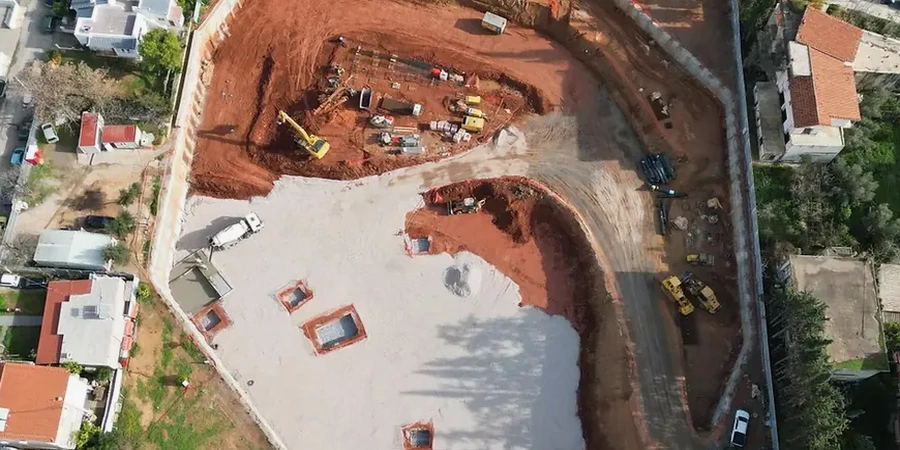
Technical reference image — Detroit

Local considerations

A deep excavation project near the RenCen in 2019 started dewatering with wellpoints sized for a design permeability of 1x10^-4 cm/s, based on a single borehole test. Fourteen feet down, the excavation hit a clean sand lens not captured in the initial boring plan. Inflow exceeded 45 gpm within hours, the south wall lost passive resistance, and the adjoining alley pavement settled nearly three inches before the system was rebalanced with additional deep wells and a revised pumping rate. The root cause was spatial variability that a linear interpolation between widely spaced borings simply missed. Our approach now calls for closely spaced CPT soundings to map sand lens continuity before finalizing the dewatering design, plus observation wells on both sides of the cut to detect differential head loss early.

Need a geotechnical assessment?

Reply within 24h.

Email: contact@geotechnicalengineering.biz

Technical parameters

ParameterTypical value
Typical excavation depth range12 to 45 ft below grade
Dominant soil profileGlacial till over Devonian shale / urban fill cap
Design groundwater elevation3 to 8 ft below surface (seasonal)
Active earth pressure coefficient (Ka)Per Coulomb/Rankine, verified with drained shear strength
Soldier pile embedment ratio1.3H to 1.8H depending on toe conditions
Typical anchor bond zone length18 to 35 ft in competent till
Seismic design category (IBC)SDC A or B for most Detroit sites
Dewatering methodDeep wells with submersible pumps or vacuum-assisted wellpoints

Associated technical services

01

Temporary Shoring and Retaining System Design

Complete soldier pile, sheet pile, and secant pile wall design with staged excavation sequencing. Shop drawings include waler sizing, tieback anchor bond length calculations, and corner bracing details for irregular lot geometries common in Detroit's older districts.

02

Construction Dewatering and Groundwater Control Plans

System sizing based on in-situ permeability testing, not textbook values. We design deep well arrays, vacuum-assisted wellpoints, and sump-and-ditch configurations with contingency triggers tied to observation well readings during excavation.

03

Excavation Monitoring and Instrumentation Plans

Inclinometer arrays, settlement points on adjacent structures, and standpipe piezometers installed before the first bucket enters the ground. We set threshold values for wall deflection and ground loss that trigger review before damage accumulates.

Applicable standards

IBC 2021 Chapter 18: Soils and Foundations, ACI 318-19: Structural Concrete for Shoring and Retaining Walls, FHWA-NHI-05-094: Soil Nail Walls and Soldier Pile Walls, ASTM D1586-18: Standard Test Method for SPT, ASCE 7-22: Minimum Design Loads for Seismic Earth Pressures

Frequently asked questions

How much should I budget for geotechnical design of a deep excavation in Detroit?

For a typical commercial basement excavation 15 to 30 feet deep in Detroit's glacial till, the geotechnical investigation and shoring design package generally falls between US$2,320 and US$8,240 depending on the number of borings, the complexity of the shoring system, and whether dewatering design is included. Projects requiring finite element analysis, tieback testing programs, or instrumentation plans fall toward the upper end of that range.

What soil conditions in Detroit most affect excavation design?

The glacial lake plain deposits beneath Detroit consist of stiff to very stiff clay with intermittent sand and silt lenses. The biggest design driver is the sand lens—it carries groundwater and can fail by flowing into the excavation if not intercepted. We also encounter stiff clay that stands well on short-term cuts but relaxes over weeks, so shoring must account for time-dependent strength loss.

Do I need a dewatering system for a basement excavation in Detroit?

Almost always yes if the excavation goes below 10 to 12 feet. The regional groundwater table sits high across much of the city, and even if the base of excavation is in clay, sand lenses in the sidewalls will weep water that softens the lagging contact and erodes fines. A properly sized dewatering system keeps the base dry and maintains passive resistance at the toe.

What triggers a monitoring threshold during excavation?

We set project-specific thresholds during design. Typical numbers for a Detroit site with adjacent masonry buildings: lateral wall deflection exceeding 0.5 inches or 0.2% of excavation height, whichever is smaller; settlement greater than 0.25 inches at the nearest building corner; and a piezometric drop exceeding 3 feet from baseline. Any one of those triggers a review and possible adjustment to the shoring or dewatering plan.
Location and service area

We serve projects across Detroit and surrounding areas.

View larger map